After more than 50 years of selling bikes in Cornwall, we’ve heard every electric bike question going. Some come up daily on the shop floor at our Summercourt store, others arrived by email at 11pm from someone halfway through deciding whether an e-bike is right for them.
So here they are.. genuine questions, answered honestly. We’ll do our best to keep adding new questions to this post that we feel will be helpful to you, the reader.
The short version, if you’re in a hurry: a legal UK e-bike assists you up to 15.5mph, needs no license or insurance, typically covers 40-80 miles per charge, costs pennies to charge, and helps with tackling hills better than any training plan.
The E-bike Basics
1. What is an electric bike and how does it work?
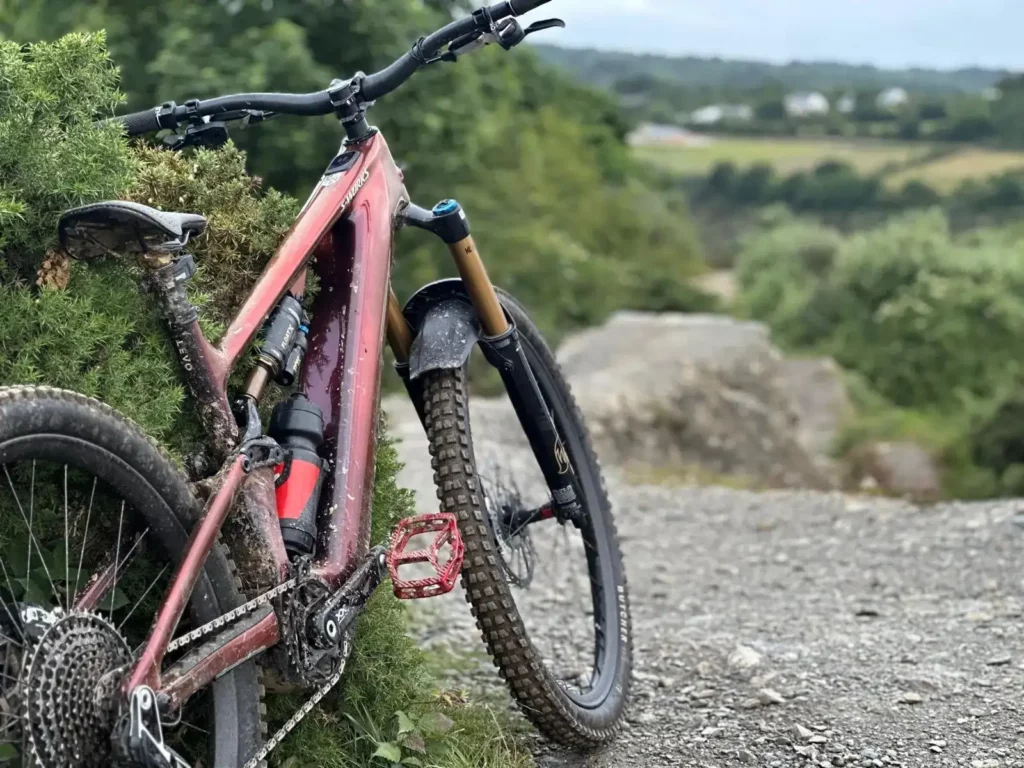
An electric bike is a normal bicycle with three extra parts: a motor, a battery, and a sensor that detects when you’re pedalling. The motor doesn’t replace your pedalling, it amplifies it. Push the pedals and the motor adds a helping shove, making it feel like you’ve got permanently fresh legs or a constant tailwind.
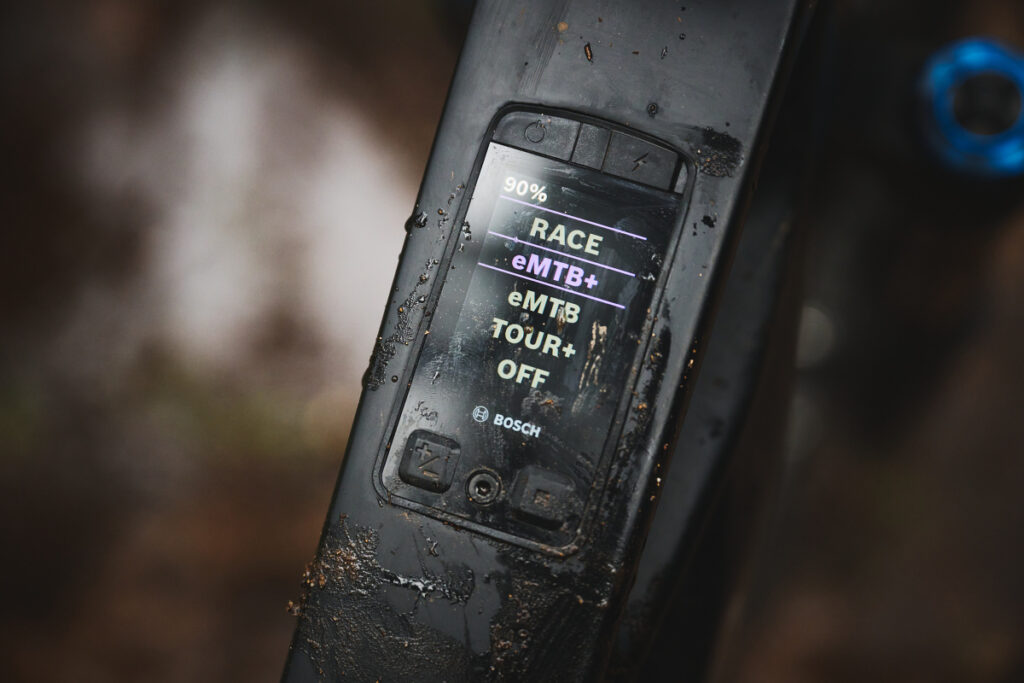
Most quality e-bikes have various assistance modes that let you choose how much help you get. From a gentle Eco mode that halves your workload by providing the minimum level of motor assistance (typically 30% to 50% of your own pedalling power), to a turbo mode that makes steep climbs feel flat. Turn the assistance off entirely and it rides like a regular bike.
The e-bikes we sell from brands like Cube and Specialized use motors from Bosch and Specialized’s own Turbo system, both of which are refined enough that the power delivery feels natural rather than jerky. You still ride the bike; the motor assistance just meets you half way.
2. Do you have to pedal an electric bike?
On a road legal e-bike in the UK, yes. The motor only assists while you’re pedalling, stop turning the pedals and the assistance stops with you. This is what separates a legal e-bike (an EAPC), from an electric moped.
Some bikes have a walk-assist button, which trundles the bike along at a strict walking pace while you push it. Handy for wheeling a loaded bike up a steep driveway or out of a shed, and is completely legal.
What you can’t have on a new road legal e-bike is a “twist and go” throttle that powers the bike above walking speed without pedalling. Bikes like that do exist in the UK market, but they’re classified as mopeds and need registration, insurance and a license to use. We cover this in full in our UK e-bike law guide.
3. Are electric bikes hard to ride?
No, and this surprises almost everyone who tries one for the first time. If you can ride a normal bike, you can ride an e-bike within about thirty seconds. There’s no clutch, no throttle to manage, nothing new to learn. You pedal, it helps, that’s it.
The two small differences worth knowing: e-bikes are heavier, so they feel more stable (most people find this reassuring rather than difficult), and the assistance kicks in as soon as you pedal, so the first push away from a junction feels sprightlier than you might expect. If your looking to try one out, ride it around a car park for a lap, by the end it’ll feel completely normal.
The riders who benefit the most from an electric bike are often those most nervous about trying one, people returning to cycling after years, or anyone who’s been put off by Cornwall’s hilly terrain. Come and test ride one at Summercourt; its the quickest way to understand what all the fuss is about.
4. Do e-bikes charge themselves as you pedal?
Almost never, and it’s worth understanding why. Regenerative charging — recovering energy when you brake or descend, like an electric car sounds brilliant but works poorly on bicycles. Bikes are light, so there’s very little energy to recover, and the drag a regenerative system adds while riding costs more than it gives back. A handful of hub-motor bikes do offer it, but the real world gain is usually just a few percent of battery range.
So in practise: you charge an e-bike by plugging its battery into the mains, either via a charging port on the bike frame, or some bikes do have removeable batteries for charging indoors. A full charge takes around 3-6 hours depending on the battery size and charger specifications.
The good news is that charging is so cheap (see question 12) that regeneration wouldn’t save you anything meaningful anyway. Pedalling harder doesn’t top up the battery, it just gets you home faster.
5. Is riding an e-bike cheating?
Only if you think escalators are cheating at stairs. Here’s what the research consistently shows: e-bike riders tend to ride more often, ride further, and rack up more total mileage than many “regular cyclists”. Regular cyclists being the keyword here, Jon our mechanic/road cycling superstar would disagree with the above statement, however he isn’t your “regular cyclist”.
Basically you still pedal, your heart rate still rises, your muscles still work. On lower assistance settings you can work exactly as hard as you like; the motor just sets a foundation for your “im tired” days, and helps reach past your cycling on your best days. An electric bike doesn’t remove the exercise, it removes the excuse.
Around here, the coastal trails are beautiful, but the Cornish hill can put a damper on anyone’s cycling ambitions. The riders grinning at the top of the climb aren’t cheating; they’re the ones still riding at 70 years old.
The E-bike Law
(The full legal picture lives in our dedicated UK e-bike laws guide, these are the short, specific answers)
6. How fast can an electric bike legally go in the UK?
The motor must stop assisting at 15.5mph (25km.h). That’s the legal limit for a road-legal e-bike in Great Britain, and every e-bike we sell is built to it.
You can ride faster than 15.5mph, downhill or under your own pedalling effort, the law only limits the motor’s contribution, not the bike’s speed. On the flat, most riders settle into a comfortable 13-15mph cruise, which is quicker than most people average on a regular bike, especially once Kernow’s gradients get involved.
Bikes advertised online as doing 20, 25, or 30mph under power are not road legal bicycles in the UK, they’re legally mopeds or motorcycles — regardless of what the listing says. If a deal online looks suspiciously fast for the money, that’s usually why. Buy from a proper bike shop and this is simply never a problem you’ll have to think about.
7. Do I need a license, tax or insurance for an e-bike?
No, no and no. A compliant e-bike is treated in law exactly like an ordinary bicycle. No license, no registration, no vehicle tax, no compulsory insurance, no MOT. You buy it you ride, same as any regular pushbike.
The bike just has to meet the legal definition: a motor rated at 250W or less, assistance that cuts out at 15.5mph, and working pedals. Every bike in our electric range qualifies.
Two sensible non-legal extras we’d recommend: a helmet (not legally required, but wear one anyway) and theft insurance. E-bikes are valuable and thieves know it, so a specialist cycle insurance policy or under a home contents extension covering the bike away from home is money well spent.
8. How old do you have to be to ride an e-bike?
Fourteen. That’s the legal minimum age to ride an electrically assisted pedal cycle on public roads in Great Britain. Even the most sensible young rider, the law says no.
There’s no upper age limit of course, and honestly the over-60s are some of our most enthusiastic e-bike customers. For younger children, the answer is a normal pedal bike until they turn 14, which is not a bad thing for building bike-handling skills anyway.
One thing parents ask us: can a 12 year old ride an ebike off-road on private land? With the landowners permission, the road rules dont apply. However a full power adult e-bike is a heavy bit of kit for a child, and we’d always steer parents towards a proper kids bike instead.
9. Can I ride an e-bike on cycle paths and bridleways?
Anywhere a normal bicycle can go, a road legal e-bike can go too: roads, cycle lanes, shared-use paths, byways, and bridleways. That includes the Camel Trail, the Clay Trails, the Coast to Coast. All of Cornwall’s best traffic free riding is e-bike friendly.
The same restrictions that apply to regular bikes also carry over: no riding on pavements where cycling isn’t permitted, and footpaths (as opposed to bridleways) remain walkers-only unless signs say otherwise.
The one caveat: this all applies to legal e-bikes. A non-compliant electric bicycle, one that assists beyond 15.5mph or runs a throttle without pedalling is legally a motor vehicle and is banned from cycle paths entirely.
10. Are the UK e-bike rules changing? I heard something about 500W.
You may have seen headlines, but nothing has changed. The government consulted in 2024 on raising the motor limit from 250W to 500W and allowing full-speed throttles, but after strong opposition from cycling and safety groups, the proposals were dropped in early 2025. The 250W/15.5mph framework stands, and there’s no live proposal to change it.
What this means in practise: any e-bike you buy today from a reputable brand is built to the settled rules, and there’s no reason to wait for a law change before buying, a change may never come.
Be wary of online retailers using this “law is changing” talk to sell over-powered bikes. It isn’t, and riding a 500W bike on UK roads today means your operating an unregistered motor vehicle…the police have the power to stop you and confiscate it.
Batteries, Range & Charging
11. How far can an e-bike go on one charge?
For most quality e-bikes: somewhere between 40 and 80 miles, with the honest answer being “the range depends on battery size, assistance level, terrain, gradient, rider weight, wind, and even temperature”.
A typical mid-size battery (around 500-625Wh) in a middle assistance setting will comfortably cover 40-60 miles of mixed Cornish riding. Drop to Eco mode on flatter routes and 80+ miles is realistic; switching to Turbo mode up every hill between Truro and the coast and you might see 30.
The practical question isn’t “what’s the maximum range?” but “will it cover my actual rides?” — and for almost everyone, a modern battery covers a full day’s riding with plenty to spare
Bosch provide a range calculator for their e-bike batteries if you’d like to get an estimate that’s more personalised. This includes being able to select variables such as the e-bike you have, assistance mode, rider weight etc. You can find this by visiting the link below: https://www.bosch-ebike.com/en/service/range-assistant
If you regularly ride further, larger batteries and range-extender options exist.
12. How much does it cost to charge an e-bike?
Pennies. A typical 500W battery holds half a kilowatt-hour of electricity, so a full charge from empty costs roughly around 12-150 at current standard electricity rates.
13. How long does an e-bike battery last before it needs replacing?
Quality batteries from the likes of Bosch and Specialized are typically rated for at least 500 full charge cycles while retaining the majority of their capacity, a “cycle” means a full 0-100% charge, so two half charges count as one cycle.
In real-world terms: if you ride enough to charge fully once a week, that’s roughly ten years before the battery drops meaningfully below its original capacity. Even heavy daily use usually sees five or more years of strong service. Batteries dont suddenly die at that point either, they gradually hold a little less charge, your 60 mile bike slowly becomes a 55 mile bike.
How you treat the battery matters as much as age: avoid leaving it at 0% or 100% for long periods, keep it out of extreme heat, and store it indoors over winter (see question 15). Treated well, the battery will outlast most people’s ownership of the bike.
14. How much does a replacement e-bike battery cost?
For a quality branded battery, Bosch or Specialized you’d be best budgeting several hundred pounds, typically in the £500-£900 range depending on capacity.
That sounds steep until you set it against the timeline from question 13: most riders won’t need a replacement for five to ten years, by which point the battery has powered thousands of miles. Spread over its life, even a top price battery costs less per year than most gym memberships costs per month.
Two pieces of honest advice. First, always replace like for like from the original manufacturer — cheap third-party “compatible” batteries are the single biggest fire risk in e-biking, and they void warranties. Second, this is a strong argument for buying an established brand in the first place: Bosch batteries will still be available and supported in a decade. The battery from a no-name marketplace bike may not be available next year.
15: How should I look after my e-bike battery in Winter?
Batteries dislike cold and damp. Three habits to keep yours healthy:
Store it indoors. If the bike lives in a shed or garage, and you have a removable battery, bring it inside. Batteries stored long-term are happiest at room temperature with around 30-60% charge, not full and not empty. Most batteries click off the bike in seconds precisely for this reason.
Charge it indoors, at room temperature. Charging a battery that’s just come in from near-freezing conditions is harder on the cells. Let it warm up for half an hour first.
Expect a little less range in the cold. Chemistry slows down in low temperatures, so a battery that gives 60 summer miles might give 45-50 in January. That’s normal, not a fault, and range returns with the warm weather.
If the bikes hibernating for a month or more, check the battery every few weeks and top it back to around half if it’s drifted low.
16. Are e-bike batteries safe? What about the fires in the news?
The battery fires you’ve read about overwhelmingly involve one thing: cheap, uncertified batteries and chargers, usually from anonymous online marketplaces, often paired with home-built conversion kits or mismatched chargers. That’s the pattern behind the headlines.
Branded batteries from Bosch and Specialized are engineered to strict safety standards, with battery management systems that control charging, monitor every cell, and shut things down if anything’s wrong. Out of the millions in daily use across Europe, fires involving properly certified systems from major manufacturers are extremely rare.
Sensible habits still apply to any battery: use only the charger supplied with the bike, don’t charge unattended overnight in an escape route like a hallway, stop usionmg a battery that’s been dropped hard or shows damage, and never but a price slashed “compatible£ battery online.
The blunt summary: the safety problem isn’t e-bikes, its uncertified electronics. Buy a proper bike from a proper shop and you’ve already avoided essentially all of the risk.
Riding & Performance
17. Can electric bikes get up steep hills?
This is the question that matters most in Cornwall, so here’s the unambiguous answer: yes, the 20% inclines out of Cornish valleys, the long grinds that never seem to end, a modern mid-level e-bike takes all of them sitting down, literally.
A quality motor delivers up to 75-85Nm of torque (more on some models), which in practise means you climb seated, at a conversational effort, up gradients that would have you walking a regular bike. You still pedal and you still choose the effort level, the motor just makes the hill negotiable instead of detour territory.
We’d argue Cornwall is close to the best e-bike case in Britain: nowhere is flat for long, so nowhere does the motor earn its keep more. It’s the difference between planning rides avoiding hills and simply riding wherever looks good.
18. Are e-bikes waterproof?
Rainproof, yes. Waterproof, not really. Motors, batteries and displays on quality e-bikes are sealed against rain, road spray, puddles and everything a wet winter throws at a bike. Ride in the rain without a second thought; commuters do it daily, year-round.
What no e-bike is designed for is submersion or pressure washing. Don’t ride through water deep enough to cover the motor, and never jet-wash the bike. A pressure washer forces water past seals that rain never troubles. A bucket, brush and gentle hose is all it needs (and living near the coast, a regular rinse to shift salt is genuinely worth doing, salt air is harder on bikes than rain ever is).
After very wet rides, a quick wipe of the battery contacts when you remove the battery to charge keeps everything crisp. Beyond that: ride it, get it wet, dont worry.
19. What happens if the battery runs out mid-ride?
Nothing dramatic, the bike simply becomes a normal bicycle. The motor stops helping, the pedals keep working, and you ride home under your own steam. There’s no locking up, no being stranded, no calling for rescue. It’s not a breakdown.
The honest caveat: e-bikes are heavier than regular bikes, so pedalling one unassisted up a hill is tough. This is why battery management is worth a moment’s thought on longer rides, most displays estimate remaining range, and dropping to Eco mode when the battery gets low can stretch the last 20% a surprisingly long way.
In real world conditions, running flat almost never happens. Modern batteries cover far more than a typical day’s riding, the display always tells you where you stand, and after a week of ownership you’ll know your bike’s habits well enough that this becomes a non-issue. Charge it like you charge your phone and you’ll never meet this problem.
20. How heavy are electric bikes? Does the weight matter?
Most full powered e-bikes weight 20-28kg, compared with 10-14kg for an equivalent regular bike. The motor, battery and beefed-up frame all add up. A newer generation of lightweight e-bikes, like Specialized’s SL models, splits the difference to around 15-17kg with a gentler motor assist.
Here’s the thing though: while you’re riding, the weight essentially vanishes. The motor more than compensates, and the extra heft from said motor actually makes the bike feel stable and planted, especially in wind or on rough surfaces.
Where weight does matter is off the bike: lifting it onto a car rack, up steps, or into a shed. If that’s part of your routine, we’d be happy to advise on which bike we’d recommend for you. Walk-assist modes help with pushing, removable batteries shave a few kilos for lifting, and the lightweight SL-style (superlight) bikes exist precisely for people who want to offset the heavier weight of electric bikes.
Buying & Owning an Ebike
21. How much does a good electric bike cost?
For an e-bike from an established brand with a certified motor system, realistic pricing starts around £1800-£2500, with the sweet spot for most riders sitting between £2500 and £4000. Premium models, full-suspension electric mountain bikes, top-spec motors, bigger batteries can run beyond that.
What the money buys compared with a £700 nameless online marketplace special: a certified, safe supported battery and motor (see question 16); a warranty backed by a company that will still exist in five years; spare parts availability for a decade; and a dealer, us…who can service, diagnose, advise and update the bike properly.
Two things soften the cost number. Running costs are negligible (question 12), so the purchase price really is the whole cost. Furthermore, the Cycle to Work scheme can take a meaningful slice off the total cost through salary sacrifice.
Ask us how that works at the Summercourt shop on 01872 487199 or email us via shop@clivemitchellcycles.co.uk
22. What’s the difference between a hub motor and a mid-drive motor?
It’s about where the motor sits, and it changes how the bike feels. A hub motor lives in the centre of a wheel (usually the rear) and pushes the wheel around directly. A mid-drive motor sits at the pedals and powers the bike through the chain and gears, the same drivetrain your legs use.
For Cornwall, or other varying elevation areas in the UK mid-drive wins. Because a mid-drive works through the gears, it multiplies its power on climbs exactly the way your legs do when you change down gears. Mid-drive also centres the weight low in the frame, so the bike handles more naturally, and they read your pedalling more sensitively, so the assistance feels like stronger, more efficient legs rather than a push from behind like on a rear wheel hub motor.
Hub motors are simpler and cheaper, and fine for flat cities. But the Bosch and Specialized systems on the bikes we stock are mid-drives for a reason: they’re built for terrain like ours.
23. Do e-bikes need special servicing?
Mostly they need the same servicing as any bike — gears, brakes, tyres and drivetrain — just ever so slightly more often, because the motor’s extra power and the bike’s extra weight wear chains, cassettes and brake pads faster than leg-power alone.
The electrical side needs less attention than most people expect: motors and batteries are sealed units with no user-serviceable parts. What they do benefit from is periodic diagnostic checks and firmware updates through the manufacturer’s dealer software, which is where buying from an authorised dealer pays off. As a Cube and Specialized dealer we can plug into the bike’s systems, read its health, update its software and handle any warranty work directly.
A sensible ebike service agenda: a full service annually or every 1000 miles or so, with the motor system checked at the same time. If your cycling through the UK winters like a machine, its worth adding a mid-season drivetrain check.
24. Can I convert my existing bike to electric?
You can…conversion kits exist from around £300-£800, but we’d honestly steer most people away, and not just because we sell complete bikes. There’s three reasons.
Safety and certification. The battery fires in the news disproportionately involve conversion kits with uncertified batteries and mismatched chargers (see question 16). A kit turns your bike into an electrical system assembled by whoever fitted it.
The donor bike wasn’t designed for it. Purpose built e-bikes have reinforced frames, stronger wheels and brakes spec’d for the extra weight and speed. A converted lightweight bike carries loads it was never engineered for.
Legality is on you. Fit a kit that assists past 15.5mph or exceeds 250W and you’ve built an unregistered motor vehicle, regardless of what the online listing claimed.
A well fitted, certified kit on a sturdy bike can work, but by the time you’ve bought a good kit and paid for proper fitting, a second hand or entry level purpose built ebike is usually better value, safer, and covered by an actual warranty.
25. What’s the best electric bike for Cornwall?
The one that matches your riding!
For everyday riding, commuting and the trails: a hybrid steel-bike with a mid-drive motor, something like Cube’s Touring or Kathmandu hybrid ranges. They handle roads, dirt tracks, the Camel Trail and Cornish gradients with ease.
For proper off-road: an electric mountain bike opens up the moors, forests, and trail centres, with the motor turning fire-road slogs into part of the fun
For road miles and lighter feel: Specialized Turbo range, including the lightweight SL models, suits riders who want assistance without the tanky weight of an ebike frame. Going more specific, an electric road bike or electric gravel bike may pique the interest of the more roadie based rider.
Still got a question we haven’t covered?
Ask us! Genuinely. Half the questions on this page exist because someone walked into our shop and asked us. Drop into Summercourt, give us a ring, or send a message, and you’ll get a straight answer from people who ride too!
This guide reflects UK rules and typical product specifications as of summer 2026. Laws and prices can change, for the official legal position on ebikes see gov.uks