Gravel Bikes Explained: What They Are, Who They're For, and How To Choose One
A decade ago, if you'd shown up to a club ride on what we now call a gravel bike, people would have looked at you funny. It would have looked like a cyclocross bike that had eaten too many pies, or a road bike with strange ideas about itself. Today it's the fastest growing category in cycling. Gravel bikes outsell pure road bikes bikes in many UK cycle shops, including ours. The Tour de France winner has one. Your mate down the pub probably has one. The bloke who used to ride a hardtail XC bike absolutely has one.
So what actually is a gravel bike? Who's it for? And, the important bit, how do you choose the right one without getting lost in a forest of cycling acronyms and tyre clearance arguements. This is the long-form answer. Pull up a chair.
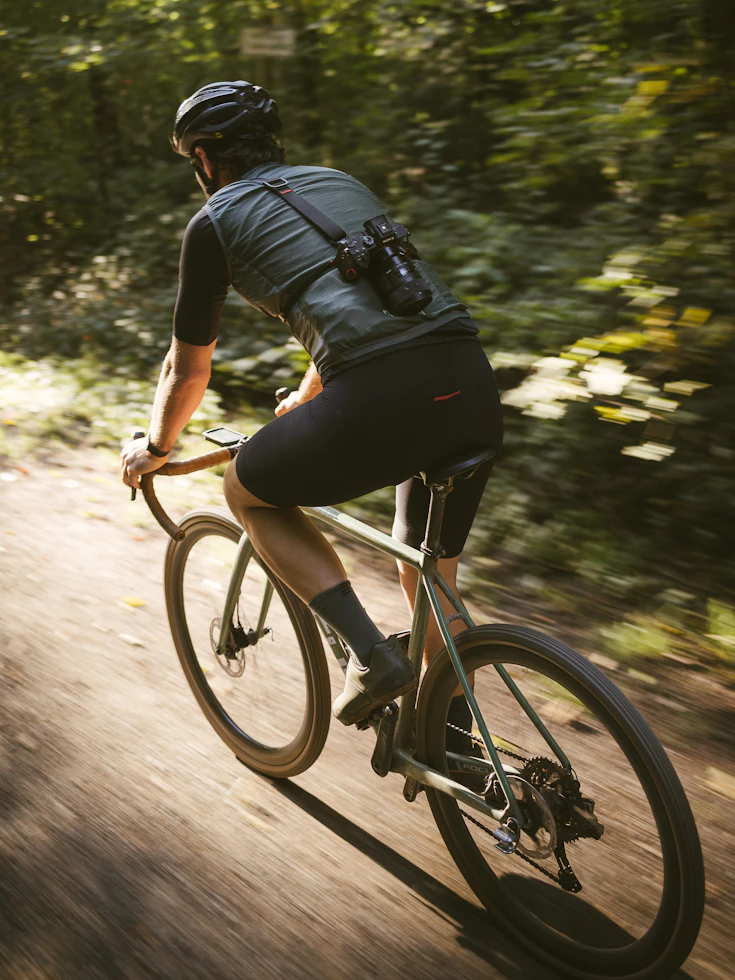
What Is A Gravel Bike?
A gravel bike is a drop-bar bicycle designed to be ridden on a much wider range of surfaces than a road bike: tarmac, gravel tracks, forest roads, bridleways, towpaths, light singletrack, and everything inbetween. Think of it as a single bike that covers most of what a road bike and a hardtail mountain bike do, without being quite as fast as either on their home terrain. That trade-off, slightly less specialist, hugely more versatile, is the entire point of gravel bikes.
The key features that distinguish a gravel bike from a road bike:
- Wider Tyre Clearance: Usually 40mm to 50mm+, compared to the usual 28-32mm on a modern endurance road bike.
- More Relaxed Geometry: Longer wheelbase, slacker head angle, taller front end for control and comfort on rougher terrain.
- Flared Drop Bars: Wider and more flared than road bars, giving more leverage and stability off-road.
- Lower Gearing: Typically 1x (single chainring) drivetrains with massive cassette ranges, designed for steep loose climbs rather than fast flat tarmac.
- Disc Brakes Only: Modern gravel bikes are universally disc-equipped, usually hydraulic
- Mounts Everywhere: Bottle cages, top tube bags, fork cargo cages, rack and mudguard eyelets. Built for bikepacking.
How Did Gravel Bikes Get So Popular?
Its worth understanding the history because it explains why the bikes are the way they are. Cyclists have been riding road bikes on rough surfaces forever, early Tour de France stages were partly unpaved, Paris-Roubaix still is. Until around 2015, if you wanted to ride a drop-bar bike off-road in the UK, you purchased a cyclocross bike. Cross bikes are fast, light and brilliant for racing, but compact, cramped, and not designed for all-day comfort and carrying luggage. Around the same time frame, American riders started organising long off-road events on a mix of gravel roads, forest tracks and quiet tarmac, Dirty Kanza (now Unbound) being the best known. They needed something more capable than a cross bike but quicker than a mountain bike. Manufacturers responded swiftly, by 2018 every major brand has a gravel range. By 2022 it was the dominant new bike category on the market.
The UK caught the bug slightly later, but harder. Our patchy lane network, abandoned railway lines, bridleways, forestry roads and coastal trails are perfect gravel territory — far better suited to mixed terrain bikes than to pure road or pure MTB. Cornwall is a particulary good example: half-decent road riding interrupted by brilliant traffic-free gravel, all linked by lanes that turn into farm tracks without warning.
Gravel Bike vs Road Bike: An Honest Comparison
The single most common question we get asked. Here's a breakdown.
| Feature | Road Bike | Gravel Bike |
|---|
| Tyre width | 23–32mm | 32–50mm+ |
| Surfaces | Tarmac only (realistically) | Tarmac, gravel, light trail |
| Speed on tarmac | Fastest | 10–15% slower |
| Comfort | Firm | Notably more comfortable |
| Carrying luggage | Limited | Designed for it |
| Drop-bar handling | Twitchy, race-feel | Stable, planted |
Price for equivalent quality
| Similar | Similar |
Honestly? If 90% of your riding is on tarmac, you'll be faster and more focused on a road bike. If less than 80% of your riding is on tarmac, or if you want one bike for varied riding, a gravel bike is the better tool. The performance gap on the road is real, but much smaller than most people think. Fit 35mm slick tyres to a gravel bike and it's surprisingly close to a road bike for the average rider.
Gravel Bike vs Hybrid: Aren't They The Same Thing?
No, though there's overlap. The simplest way to put it:
A hybrid has flat handlebars, an upright riding position, and is designed primarily for commuting, errands, and casual leisure riding. They're brilliant for that, but not the optimal choice for big days in the saddle or properly rough surfaces.
A gravel bike has drop bars, a more efficient (lower) riding position, and is designed for longer, faster rides over varied terrain. You can absolutely commute on one, and many people do, but the design priorities are different.
If most of your riding is under 10 miles each way, and mostly tarmac, get a hybrid. If you want to do 50 mile mixed-surface adventure rides at the weekend and might commute on it during the week, get a gravel bike.
Gravel Bike vs Cyclocross Bike: Aren't They The Same?
They look almost identical to non-cyclists. They're not.
A cyclocross bike is a purpose-built racing tool for an hour of high-intensity riding around a muddy field, with frequent dismounts and obstacles. The geometry is designed specifically for this, the bottom bracket is high (for clearance over obstacles), tyre clearance is limited to roughly 33mm (UCI race rules), and they're built to be light and aggressive.
In comparison, a gravel bike is built for all-day comfort, stability, and versatility. Lower bottom bracket, longer wheelbase, much wider tyre clearance, mounts for luggage, more relaxed geometry. Slower around a cyclocross course, but vastly better better at everything else. If you race cyclocross, you need a CX bike. Otherwise, get a gravel bike.
Gravel Bike vs Mountain Bike: When Does It Cross Over?
This is where it gets interesting and where gravel bikes are still evolving.
A modern hardtail XC mountain bike with 100mm of front suspension and 2.2" tyres is a far more capable off-road bike than any gravel bike. It always will be. Suspension and a flat bar give you control gravel bikes simply can't match on technical singletrack, rooty and rocky terrain. However a gravel bike is significantly faster on smoother terrain such as tarmac, fire roads, hardpack, whilst being far more efficient over long distances. If your "off-road" riding is mostly trails like the Camel Trail, the Mineral Tramways, forestry roads, and gravel bridleways, a gravel bike will be the more enjoyable tool 90% of the time.
The honest test: are you riding terrain or trails? Terrain (mixed surfaces, getting from A to B off-road) is gravel territory. Trails (purpose-built singletrack, technical descents,) is mountain bike territory.
What To Look For When Choosing A Gravel Bike
Right, you've decided a gravel bike is what you want. Here's what actually matters when picking one out.
Frame Material
Aluminium - most affordable, durable, can ride well. Best value at entry and mid-level.
Carbon - lighter, often more compliant (designed flex), best ride quality, more expensive. Worth it once you're spending £2000+
Steel - beloved by bikepackers for the ride feel and durability. Heavier, niche choice, fewer options at most price points
Titanium - boutique, lifetime ownership, premium price. Lovely if your budget allows.
For most riders, modern aluminium gravel frames offer 75% of the experience of carbon at half the price. Don't feel pressured into carbon if your budget doesn't stretch.
Tyre Clearance
This is the big one. Bigger clearance = more versatility.
40mm clearance -plenty for most UK gravel riding, fast on the road, limited if it gets really rough
45mm clearance -the sweet spot for most riders; covers everything from light trail to fast road
50mm+ clearance -proper off-road capability, often called "monster cross" or "drop-bar MTB"
Look at the bikes you're considering and ask the supplier what the maxiumum tyre size is. Bigger is future-proof.
Gearing: 1X vs 2X
1x (single chainring) - simpler, lighter, quieter, fewer mechanical issues, perfect for technical terrain. Less efficient at high speeds on the road because of larger gaps between gears
2x (double chainring) -more gear range, smaller jumps between gears, better for fast road riding. More mechanical complexity, slightly heavier.
For mixed UK riding with occasional steep climbs and some road riding, 1x is the safer default and what most modern gravel bikes are shipped with. If you do serious road miles or live somewhere flat where you want close-reatio gearing, 2x has its place.
Geometry: "Race Gravel" vs "Adventure Gravel"
Gravel bikes have split into two broad camps.
Race Gravel -shorter wheelbase, slightly more aggressive position, faster handling. Examples: Specialized Crux
Adventure gravel -longer wheelbase, taller front, mounts everywhere, more stable. Examples: Specialized Diverge, Cube Nuroad. Best for bikepacking, comfort, all-day riding, beginners.
Most people want adventure gravel. The race-focused bikes are brilliant for what they do but unforgiving on long days.
Suspension: Yes or No?
A growing number of gravel bikes now have some form of suspension, usually a short-fork (Fox AX, RockShox Rudy) with 30-40mm of travel, occasionally a suspension stem or seatpost. This is genuinely useful on rough UK tracks but adds cost and weight.
If you ride mostly hardpack and lanes, you dont really need it. If you ride genuinely rough bridleways and want to keep up the pace, it's worth considering.
What Does a Decent Gravel Bike Cost in 2026?
The honest price points:
- Under £1000: Entry-level alloy frames, mechanical disk brakes, basic groupsets. Fine for getting started; you'll outgrow it if you ride a lot.
- £1000-1800: Sweet spot for first time buyers. Hydraulic discs, proper 1x gravel groupset (shimano GRX 400/600, SRAM Apex), tubeless ready wheels. Genuine performance and longevity here.
- £3500+: Top tier carbon. electronic shifting, premium wheels, often suspension.
For most buyers, somewhere between £1200 and £2500 hits the sweet spot of performance, durability and value. If your a cycling aficionado, a higher spec model may be your best bet. You can save up to 39% via the Cyclescheme.
Kitting Out Your Gravel Bike
A gravel bike is the start, not the finish. What you'll want alongside it:
Pedals & Cleats - most bikes are shipped without pedals. SPD-style clipless or flat, both work fine.
Hydration: Bottles and Packs - long rides need real water capacity. See our cycling hydration guide for the full breakdown.
Bikepacking bags - frame bags, saddle packs, top-tube bags. Even on day rids, the storage is brilliant.
Bike Lights - gravel riding at dawn or dusk? Front and rear lights are essential.
Multi-tool, pump and spares - Self suffiency matters when out on long rides.
Frequently Asked Questions
What Is A Gravel Bike?
A gravel bike is a drop-bar bicycle designed to ride well on mixed surfaces: tarmac, gravel, bridleways, light trail. Wider tyre clearance, more relaxed geometry and disc brakes distinguish it from a road bike.
Can you use a gravel bike on the road?
Yes, gravel bikes are perfectly capable on tarmac, just slightly slower than a dedicated road bike. Fit slick or semi-slick tyres and they're surprisingly close. Many riders use one gravel bike for both road and off-road.
Is a gravel bike good for commuting?
Excellent for commuting, especially if your route includes any rough sections, towpaths, or unpaved shortcuts. The wider tyres absorb potholes, the mounts let you carry luggage easily, and they're built to handle British weather year-round.
Can I fit mudguards to a gravel bike?
Most gravel bikes have mudguard mounts. Tyre clearance with full guards fitted is usually 38-42mm depending on the frame. Best checking the specific model, guards ensure your rear side doesnt get lagged in mud.
What size tyres should I run on a gravel bike?
For mixed surface UK riding, 40-45mm is the sweet spot. Go narrower (35-38mm) if you're mostly on road. Go wider (47-50mm) for rough off-road and bikepacking. Tubeless gives you the best balance of grip, comfort and puncture resistance.
Can I race on a gravel bike?
Yes, there's a thriving UK gravel race scene, plus thousands of sportives, gravel events, and ultra-distance rides. Most participants are on standard gravel bikes, not specialist race machines.
Is a gravel bike good for beginners?
Very much so. They're more comfortable than road bikes, more confidence-inspiring on rough surfaces, and more versatile. A great choice for your first drop-bar bike.
Do I need a gravel bike if I already have a road bike and a mountain bike?
In all honesty, Probably not, if both bikes already cover your riding needs. Many cyclists find a gravel bike replaces both for the kind of riding they actually do ona day to day basis. The "one bike that does everything well" is a compelling reason to buy one but not a concrete necessity.
Reading about bikes only takes you so far. The single best thing you can do before spending money is to throw a leg over a few bikes to get a feel. Geometry, fit and feel vary enormously between brands, and what reads well on a spec sheet can feel completely different once you take a seat on the saddle.
We're a Cube, Specialized, and Whyte dealer with a strong gravel range across all three, including the Specialized Diverge and Cube Nuroad families. Drop us an email at shop@clivemitchellcycles.co.uk or call us on 01872 487199 for any queries.
By Dan Regan - Clive Mitchell Cycles | Published June 13, 2026
Written by a human with AI assistance.